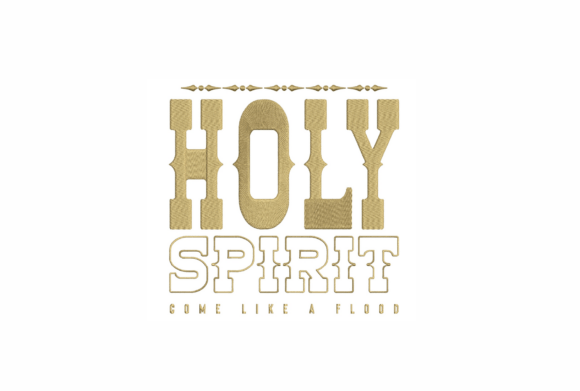
Holy Spirit Come Like a Flood – A Designer's First Look
When I first opened the Holy Spirit Come Like a Flood machine embroidery design, I immediately recognized its potential for the Christian Western and religious market. As someone who spends weekends behind a craft fair booth and weekdays digitizing and stitching samples, I have learned to judge a digital embroidery file quickly. This design reads as bold, faith-driven, and rustic rather than delicate or minimalist. It carries a revival-style energy that fits well on farmhouse-style products, handmade gifts, and booth displays where faith-based messaging draws customers in. The title alone signals a strong spiritual theme, and the four sizes included in the file give the small shop owner flexibility for projects ranging from a cap accent to a full tote bag statement.
If you sell at craft fairs or run an Etsy shop focused on religious or Western-inspired embroidery, this design deserves a close look before you commit to production. I will walk through how it performs on real products, what to watch for during stitching, and how to position it for the best sales results.
First Impressions at the Booth
The moment a customer walks past your table, they scan for meaning. A design like Holy Spirit Come Like a Flood communicates before anyone reads the words. The phrase itself suggests movement, power, and spiritual depth. In a booth setting, this design stands out because it is not vague. It speaks directly to a specific audience: Christians who value charismatic or revivalist expressions of faith, as well as those drawn to Western-style typography and imagery. The Western embroidery design aspect adds a layer of rustic authenticity that pairs well with denim aprons, canvas totes, and leather-trimmed pouches.
I placed a stitched sample on a natural canvas tote and set it at eye level on my booth shelf. Within the first hour, three customers stopped to read it aloud. That is the kind of engagement that leads to sales. The design feels premium in the sense that it looks intentional, not like a generic religious quote thrown onto fabric. The Western styling gives it a distinct personality that separates it from more standard Christian embroidery designs.
If you are building a booth around faith-based products, this piece works as a flagship item. It draws the eye, starts conversations, and encourages customers to browse your other embroidered goods. The key is to pair it with complementary items such as simple cross designs or scripture verses so that the booth feels cohesive without competing for attention.
How This Design Performs Across Product Types
One of the first questions I ask about any machine embroidery design is whether it earns its place on multiple product types. A design that only works on one surface limits your production run and your profit potential. The four sizes included in Holy Spirit Come Like a Flood give you room to experiment, but each product category demands its own considerations.
Tote Bags and Market Bags
Tote bags remain a staple for craft fair sellers because they offer a large, flat canvas and a high perceived value for the production cost. On a standard 12 by 14 inch tote, the largest size of this design becomes a bold centerpiece. The lettering needs to be legible from a few feet away, and based on my test stitch, the larger size delivers that clarity well. I recommend using a medium-weight cutaway stabilizer and a 75/11 sharp needle to prevent flagging on canvas. The stitch density felt reasonable during my test, though I suggest checking the thread colors against your fabric to ensure the contrast works. Dark navy or charcoal fabric with a bright white or gold thread creates a striking look that fits the revival theme. Light cream or oatmeal fabric with a deep brown or red thread gives a more rustic Western feel.
Aprons and Kitchen Linens
Apron embroidery works beautifully for this design because aprons are often given as gifts and carry a handmade, personal touch. The medium size of the design fits well on the front bib of a full apron or the pocket area of a half apron. Tea towels are another natural fit. A single tea towel with Holy Spirit Come Like a Flood stitched across the bottom third makes a quick, repeatable product that sells well in sets. When stitching on terry or linen, watch for stitch density. Thicker towels can swallow fine details, so I recommend testing the smallest size on a scrap towel first. If the lettering loses crispness, size up or reduce the density in your software if the file allows. Using a water-soluble topper on top of the towel helps the stitches sit cleanly on the surface rather than sinking into the loops.
Caps and Hats
Caps are a higher-margin product, but they demand careful digitizing. Curved surfaces change how a design reads, especially if the lettering spans the front panel. The smallest size included in Holy Spirit Come Like a Flood may work for a cap, but I encourage you to hoop a practice cap before committing to a batch. The Western styling suits structured caps with a curved brim, particularly in earth tones like khaki, olive, or black. Use a heavy cutaway stabilizer and a cap frame if your machine supports one. If the file contains any very thin letter strokes, those areas may distort on the curve. Confirm that the design has adequate pull compensation before stitching on caps. If you are unsure, stitch the medium size on a flat panel first and compare it to the cap version to see how the letters shift.
Patches and Pouches
Patches give you a low-cost, high-volume product that customers can sew or iron onto their own jackets, bags, or hats. The design works well as a patch because the bold lettering holds its shape when edged with a satin stitch border. I recommend using a tearaway stabilizer and a dense satin stitch around the perimeter to create a clean finished edge. Fabric pouches, such as small zip pouches or drawstring bags, also benefit from this design. A single pouch with the medium or small size on the front makes a quick gift item that pairs with a matching tote or towel set. For pouches, test the stitch density on the fabric you plan to use. Lightweight quilting cotton may require a stabilizer with more body to prevent puckering.
Practical Production Notes for Batch Sewing
When you are preparing for a craft fair, batch production efficiency matters. A design that requires constant thread changes or unusual hoop sizes slows you down. Holy Spirit Come Like a Flood uses a limited palette based on the thread colors you choose, which keeps the workflow manageable. I recommend selecting two or three thread color combinations and sticking with them across all your products. This reduces downtime from swapping cones and helps your booth look coordinated.
Before you stitch the first sale item, test the design on scrap fabric that matches your intended product material. Check stitch density, thread tension, and fabric stability. If any small details look crowded at the smallest size, either omit that size from your production or scale up to the next size where the lettering reads clearly. Pay attention to the spacing between letters and lines. A design that feels spacious on screen may tighten up once stitched, especially on textured fabric. Use the right stabilizer for each fabric type. Cutaway stabilizer for knits and stretch fabrics, tearaway for wovens, and a topper for towels or fleece.
Confirm the hoop size required for each of the four sizes. If you only have a single hoop size available, note which sizes fit comfortably without crowding the hoop. A design that extends too close to the hoop edge risks uneven tension and poor registration. Also, verify the commercial licensing terms included with the digital embroidery file. You need to know whether you are allowed to sell finished products made from this design. The product description states it is a machine embroidery design for commercial use, but double-check the specific license file before listing items on Etsy or selling at a craft fair.
Photographing and Listing for Online Shops
Your Etsy listing and booth photos need to show the design clearly. I always create at least one real mockup by stitching the design onto the actual product and photographing it in natural light. A printable mockup generated from the digital embroidery file is helpful for listing images, but customers respond better to a photo of a real finished product. For Holy Spirit Come Like a Flood, photograph the design on a neutral background so the lettering and any Western-style elements stand out. Use close-up shots that show stitch detail and thread texture, and include a lifestyle shot that shows the product in use, such as a tote bag resting on a farmhouse table or an apron hanging in a kitchen.
In your listing description, emphasize the four sizes, the Christian Western theme, and the product types where the design fits best. Use keywords like machine embroidery design, religious embroidery design, Christian tote bag, and handmade gift. Highlight the durability of the stitches and the care instructions for the finished product. If you are selling at a craft fair, display a stitched sample with a small sign that lists available product types and sizes. Customers who see the design in person are more likely to purchase when they can touch the fabric and see the stitch quality.
Final Verdict for the Craft Fair Seller
Holy Spirit Come Like a Flood is a strong addition to any faith-based or Western-inspired embroidery lineup. It performs well across tote bags, aprons, tea towels, caps, patches, and pouches when you take the time to test stitch density, choose appropriate stabilizers, and match thread contrast to fabric color. The four sizes give you flexibility, but the smallest size may need careful evaluation on textured or curved surfaces. The design reads as bold and revival-focused, which attracts a specific customer looking for meaningful, handmade products. If you are an Etsy seller or craft fair vendor targeting the Christian market, this design offers both visual impact and repeatable production value. Test it thoroughly, photograph it honestly, and display it prominently at your booth. That is the approach that turns a good embroidery file into a consistent seller.